Інші зображення цього випадку
Image
Gluteus minimus partial tear
- Image ID
- MPX1074_synpic24653
- Case U_id
- MPX1074
- Modality
- MR · MR - T2 weighted
- Plane
- Coronal
- Location
- Musculoskeletal (Spine and Muscles)
- Age / Sex
- 35 / female
- Caption
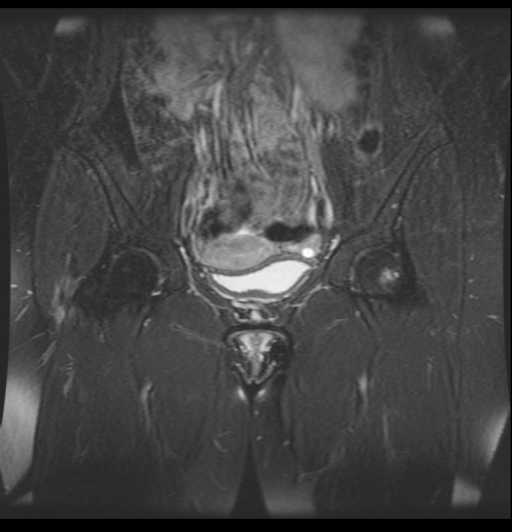
- STIR coronal MR image shows an area of high signal intensity at anterior tubercle of the right greater trochanter. The right gluteus medius tendon is thickened, with high signal intensity on these fat suppressed MR images. Mild asymmetric increased signal is present on the fat-suppressed MR images, adjacent to the greater trochanter within the soft tissues.
- ACR Codes
- 4.4
Clinical case
- History
- Pt c/o pain in right hip, over greater for several months following uneventful SVD (single vaginal delivery). Exacerbated by weight bearing and lifting.
- Exam
- Pain is reproducible with palpation of anterior greater trochanter.
- Findings
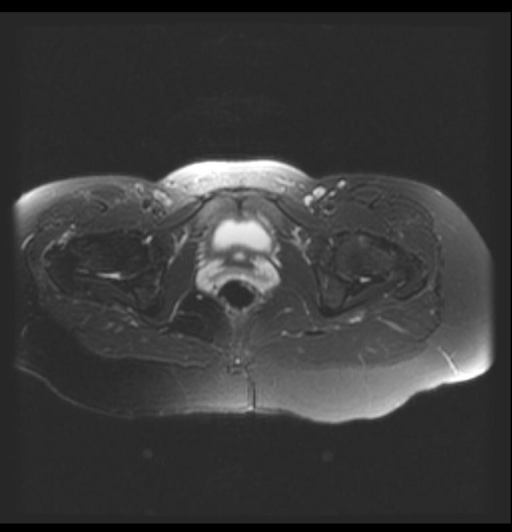
- Axial T2-weighted MR image and STIR coronal MR image show an area of high signal intensity at anterior tubercle of the right greater trochanter. The right gluteus medius tendon is thickened, with high signal intensity on these fat suppressed MR images. Mild asymmetric increased signal is present on the fat-suppressed MR images, adjacent to the greater trochanter within the soft tissues.
- Differential Diagnosis
- Trochanteric bursitis Gluteus minimus tear, avulsion Metastatic disease Infection
- Case Diagnosis
- Gluteus minimus partial tear
Topic
- Category
- Trauma
- ACR Code
- 4.4
Disease discussion
Greater trochanteric pain syndrome (GTPS) is characterized by local tenderness over the greater trochanter. The pain is exacerbated by standing, lifting, descending stairs, lying on the affected side and crossing the legs. The pain can radiate down the lateral length of the leg, and cause tenderness along the length of the ilio-tibial tract. The differential diagnosis of these physical findings include hip fracture, avascular necrosis, osteoarthritis, ilio-tibial band syndrome, infection of the joint and/or soft tissues of the hip, metastatic disease, and lumbosacral radiculopathy
Traditionally, the term GTPS was considered synonymous with trochanteric bursitis, and was treated with rest, injection and NSAIDs. More recently, several studies have identified pathology in the gluteus medius and minimus (the abductor tendons) as alternate causes of this pain, as identified on MRI and correlated with surgical findings. Findings include complete tears to mild tendonitis of the muscles at their insertion onto the greater trochanter. Studies have suggested that the bursitis may be secondary to abductor tendon pathology, prompting investigators to question the current treatment of the pain syndrome. Surgical intervention is recommended in the setting of a complete tear with retraction, while physical therapy and local injection at the affected tendon may be more appropriate for smaller tears and strains.
While local trauma has been identified as a cause of GTPS, there have been no cases in the literature describing a tear occurring during childbirth. Because this syndrome is currently undergoing some change in thought and approach to cause and treatment, perhaps it will be more readily identified as a cause of post-partum hip pain in the future.